Fortis
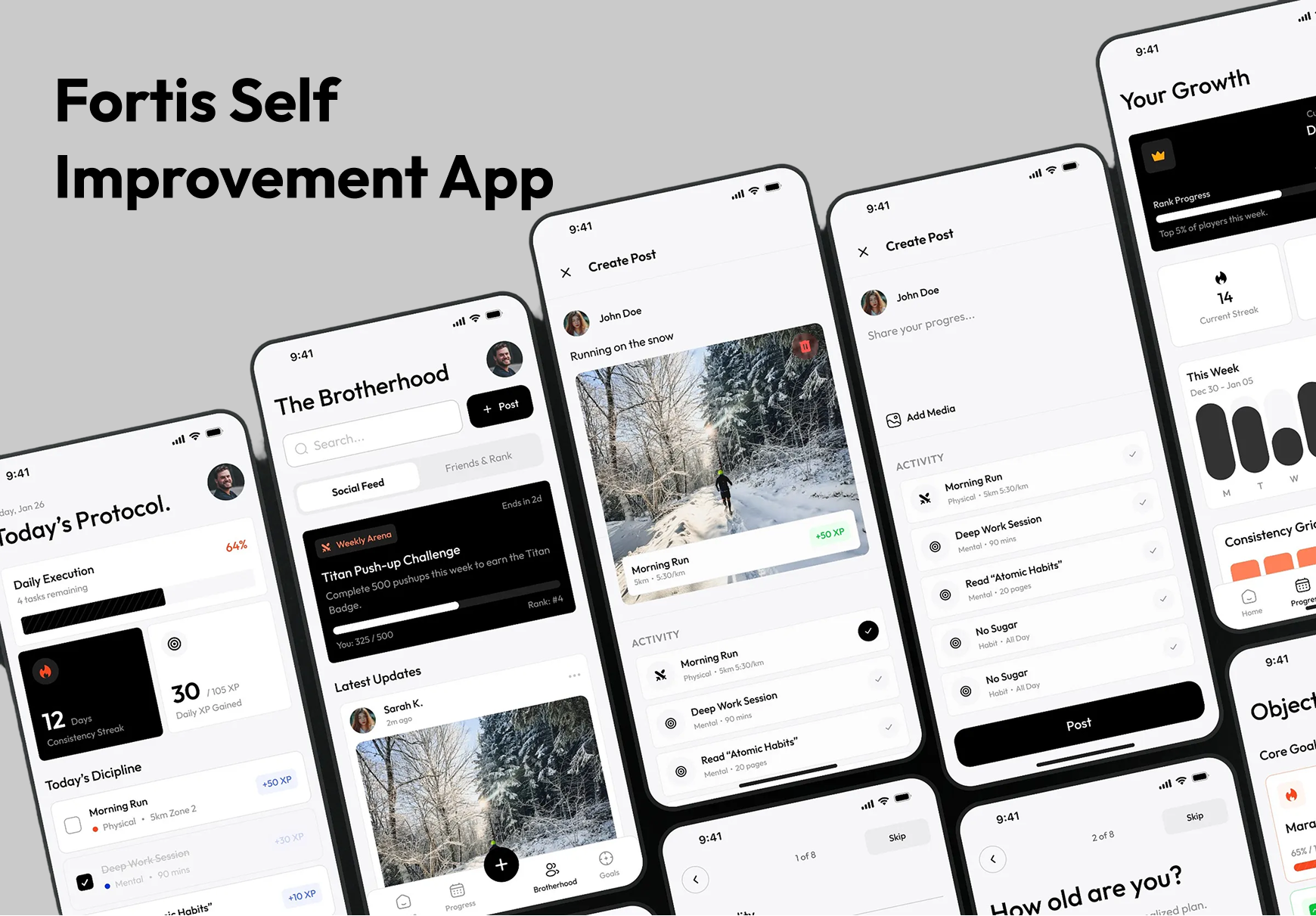
A mobile product experience built around daily execution, progress visibility, goals, and social accountability, supported by a connected design system.
The context
Fortis is built for users who start goals but struggle to stay consistent over time. The design problem was not a lack of features. The product needed a structure which keeps daily actions clear while showing enough progress and accountability to support continued use.
The experience also needed a system strong enough to support several connected flows without making the app feel fragmented.
The thinking behind the work
I designed the app around a small set of connected product areas.
Onboarding
The onboarding flow introduces the product approach and sets expectations around discipline, progress, and accountability before users enter the main experience.

Home and daily execution
The home experience keeps today's work visible through tasks, streaks, and XP. The interface gives priority to the next action instead of filling the first screen with secondary data.

Progress and consistency
Charts, grids, and history views give users a clear way to see patterns over time without turning progress into a dense analytics screen.

Goals and objectives
Goal flows break larger objectives into smaller actions so long term plans stay connected to daily work.

Brotherhood and accountability
The social layer introduces rankings and shared progress. It supports accountability while keeping the core product centered on personal execution.

Profile and settings
Profile, preferences, notifications, and account controls follow the same component and spacing rules as the main product.
Across these flows, shared styles, components, and reusable patterns keep the interface consistent as features expand.

From direction to delivery
I handled product thinking, UX structure, UI design, and the design system in Figma. The work covers the main product flows and provides a reusable interface foundation for continued product development.


